
Government industrial estates have played a major role in India’s industrialization by providing businesses with affordable industrial land, ready infrastructure, and policy support. Developed by state industrial development corporations and government agencies, these estates help entrepreneurs establish manufacturing units without having to build basic infrastructure from scratch.
Whether you are planning to start a factory, expand an existing business, or understand how government industrial estates operate, this guide explains everything from their purpose and benefits to the major authorities managing them across India.
Quick Overview
| Particular | Details |
| Purpose | Planned industrial development through government agencies |
| Developed By | State Industrial Development Corporations and Government Authorities |
| Suitable For | MSMEs, Startups, Manufacturing Units, Large Industries, Export-Oriented Businesses |
| Infrastructure | Industrial plots, roads, electricity, water supply, drainage, security |
| Plot Ownership | Leasehold or Freehold (depends on the authority) |
| Available Across | All Indian states and many union territories |
| Industries Supported | Engineering, Textile, Automobile, Pharma, Food Processing, Chemicals, Electronics and more |
What are Government Industrial Estates?
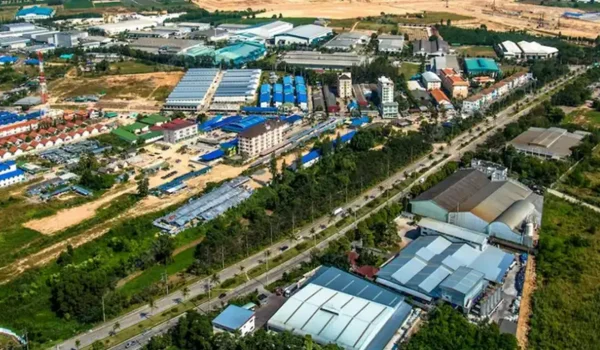
Government industrial estates are planned industrial areas developed and managed by government departments, industrial development corporations, or state authorities. Their objective is to promote industrial growth by offering businesses well-developed industrial plots with essential infrastructure and easier access to government support.
These estates reduce the challenges involved in acquiring land and developing utilities, allowing businesses to focus on production and growth.
Objectives of Government Industrial Estates
Government industrial estates are established to:
- Promote industrial development
- Encourage manufacturing investment
- Support MSMEs and startups
- Create employment opportunities
- Develop backward and rural regions
- Improve export competitiveness
- Attract domestic and foreign investment
- Build organized industrial clusters
Features of Government Industrial Estates
Most government-developed industrial estates provide:
- Ready industrial plots
- Internal road network
- Reliable electricity supply
- Water supply system
- Drainage infrastructure
- Street lighting
- Security arrangements
- Fire safety provisions
- Common administrative facilities
- Green spaces
- Waste management systems
- Internet and telecom connectivity
The facilities available may vary depending on the authority and the estate.
Benefits of Government Industrial Estates
Affordable Industrial Land
Government industrial estates often offer plots at competitive rates compared to private industrial developments.
Ready Infrastructure
Businesses can start construction more quickly because essential infrastructure is already available.
Government Incentives
Depending on the state and industry, businesses may benefit from:
- Capital subsidies
- Interest subsidies
- Stamp duty concessions
- Electricity duty exemptions
- Tax incentives
- Skill development support
- Infrastructure assistance
Better Connectivity
Many government industrial estates are strategically located near:
- National Highways
- Railway stations
- Ports
- Airports
- Logistics hubs
Transparent Allotment Process
Most authorities allocate plots through a defined application and approval process, ensuring transparency and compliance with industrial policies.
Major Government Industrial Development Authorities in India
Every state has one or more government agencies responsible for developing industrial estates.
| State | Government Authority |
| Maharashtra | MIDC (Maharashtra Industrial Development Corporation) |
| Gujarat | GIDC (Gujarat Industrial Development Corporation) |
| Rajasthan | RIICO (Rajasthan State Industrial Development and Investment Corporation) |
| Karnataka | KIADB (Karnataka Industrial Areas Development Board) |
| Tamil Nadu | SIPCOT and SIDCO |
| Andhra Pradesh | APIIC (Andhra Pradesh Industrial Infrastructure Corporation) |
| Telangana | TSIIC (Telangana State Industrial Infrastructure Corporation) |
| Uttar Pradesh | UPSIDA (Uttar Pradesh State Industrial Development Authority) |
| Haryana | HSIIDC (Haryana State Industrial and Infrastructure Development Corporation) |
| Punjab | PSIEC (Punjab Small Industries & Export Corporation) |
| Kerala | KINFRA and SIDCO |
| Odisha | IDCO (Industrial Infrastructure Development Corporation) |
| Bihar | BIADA (Bihar Industrial Area Development Authority) |
| Jharkhand | JIADA (Jharkhand Industrial Area Development Authority) |
| Madhya Pradesh | MPIDC (Madhya Pradesh Industrial Development Corporation) |
| Chhattisgarh | CSIDC (Chhattisgarh State Industrial Development Corporation) |
Popular Government Industrial Estates in India
Some of the country’s well-known government-developed industrial estates include:
| Industrial Estate | State | Managed By |
| Chakan MIDC | Maharashtra | MIDC |
| Taloja MIDC | Maharashtra | MIDC |
| Butibori MIDC | Maharashtra | MIDC |
| Sanand GIDC | Gujarat | GIDC |
| Ankleshwar GIDC | Gujarat | GIDC |
| Vapi GIDC | Gujarat | GIDC |
| Neemrana Industrial Area | Rajasthan | RIICO |
| Sitapura Industrial Area | Rajasthan | RIICO |
| Peenya Industrial Area | Karnataka | KIADB |
| Hosur SIPCOT | Tamil Nadu | SIPCOT |
| Sriperumbudur SIPCOT | Tamil Nadu | SIPCOT |
| Pithampur Industrial Area | Madhya Pradesh | MPIDC |
| Patancheru Industrial Area | Telangana | TSIIC |
| Haridwar SIDCUL | Uttarakhand | SIDCUL |
Industries Commonly Found in Government Industrial Estates
Government industrial estates accommodate a wide range of industries, including:
- Automobile manufacturing
- Textile and garments
- Pharmaceuticals
- Chemicals
- Engineering products
- Electronics
- Food processing
- Plastic products
- Packaging
- Steel fabrication
- Warehousing
- Logistics
- Renewable energy equipment
Who Can Apply for Government Industrial Plots?
Eligibility varies by state, but applicants generally include:
- Individual entrepreneurs
- MSMEs
- Startups
- Partnership firms
- LLPs
- Private Limited Companies
- Public Limited Companies
- Cooperative societies
- Export-oriented units
Applicants must comply with the industrial policy and eligibility criteria of the respective authority.
How to Apply for a Government Industrial Plot
Although the process differs slightly across states, it usually involves the following steps:
- Identify a suitable industrial estate.
- Check plot availability.
- Submit the online or offline application.
- Upload or submit required documents.
- Pay the application fee.
- Verification by the authority.
- Plot allotment based on eligibility and availability.
- Execute the lease or sale agreement.
- Obtain statutory approvals.
- Start construction within the specified timeframe.
Documents Commonly Required
Applicants may need:
- Aadhaar Card or Passport
- PAN Card
- Address proof
- Business registration documents
- Company incorporation certificate (if applicable)
- Project report
- Financial statements
- GST registration (if applicable)
- Bank certificate
- Passport-size photographs
Document requirements vary across authorities.
Challenges of Government Industrial Estates
While government industrial estates offer many benefits, businesses may also face certain challenges:
- High demand for plots in prime locations
- Waiting periods for allotment
- Compliance with industrial policies
- Environmental clearances
- Construction deadlines
- Periodic maintenance charges
Carefully reviewing the terms and conditions before applying can help businesses avoid delays.
Government Industrial Estate vs Private Industrial Estate
| Government Industrial Estate | Private Industrial Estate |
| Developed by government authorities | Developed by private companies |
| Often more affordable | Generally higher land costs |
| Eligible for various government schemes | Incentives depend on the developer and location |
| Transparent allotment procedures | Developer-specific policies |
| Focus on industrial promotion | Often market-driven development |
Tips Before Choosing a Government Industrial Estate
Before applying for an industrial plot, consider:
- Distance from highways, ports, and airports
- Availability of utilities
- Plot size and expansion options
- Industry-specific approvals
- Labour availability
- Nearby suppliers and customers
- State industrial incentives
- Environmental regulations
- Lease or ownership terms
Future of Government Industrial Estates in India
Government industrial estates are evolving to meet the needs of modern manufacturing. Many new projects focus on:
- Smart industrial infrastructure
- Green manufacturing
- Plug-and-play industrial facilities
- Renewable energy integration
- Digital approval systems
- Sustainable waste management
- Logistics and multimodal connectivity
These developments support national initiatives aimed at strengthening India’s manufacturing sector and attracting new investments.
Frequently Asked Questions
What is a government industrial estate?
A government industrial estate is a planned industrial area developed and managed by a government authority to provide industrial plots and infrastructure for manufacturing and business activities.
Who develops government industrial estates in India?
Government industrial estates are developed by state industrial development corporations, industrial infrastructure authorities, and other government agencies.
Can MSMEs apply for government industrial plots?
Yes. Most authorities reserve plots and offer special schemes for MSMEs, startups, and small manufacturing units.
Are government industrial estate plots leasehold or freehold?
The ownership model depends on the authority. Some offer leasehold plots, while others provide freehold ownership.
What industries can operate in government industrial estates?
Manufacturing, engineering, food processing, pharmaceuticals, electronics, textiles, chemicals, logistics, and many other industries can operate, subject to the estate’s regulations and applicable laws.
Conclusion
Government industrial estates have been instrumental in building India’s manufacturing ecosystem by providing affordable industrial land, quality infrastructure, and policy support. Managed by state industrial development authorities, these estates help businesses establish and expand operations in an organized environment.
Whether you are an MSME, a startup, or a large manufacturing company, choosing the right government industrial estate can reduce setup costs, improve operational efficiency, and provide access to valuable government incentives. Exploring the facilities, location, and policies of different state authorities can help you select the most suitable industrial estate for your business goals.




Leave a Reply